Enquiry Conversion
First-Response Speed Is a Revenue System, Not an SLA Timer
Most enquiries are wasted. You just don't see it. Turn first-response speed into an operating system that detects intent, routes fast, and confirms bookings.
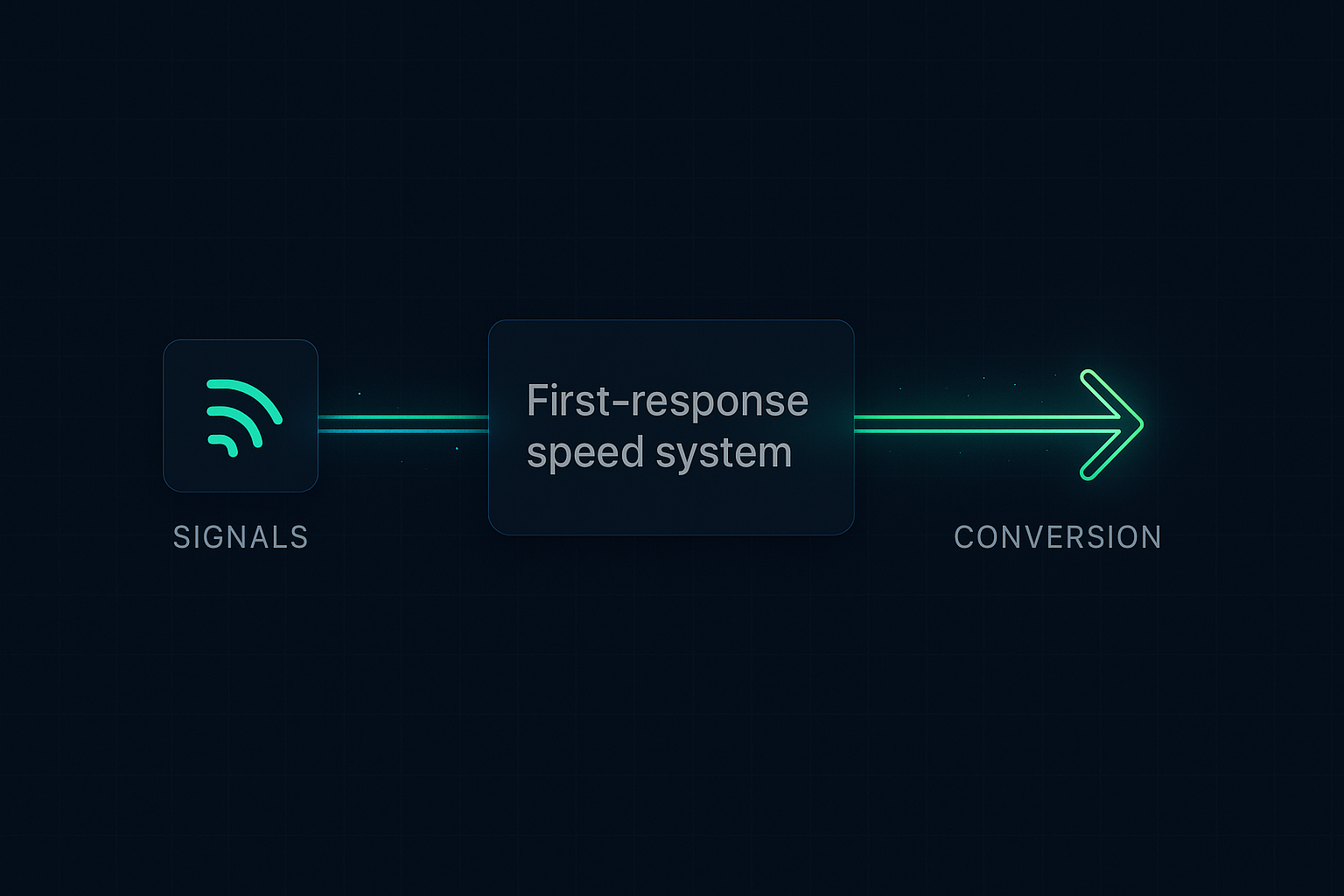
Most enquiries are wasted. You just don’t see it. SLAs are hit. Bookings still slip. Why? Because first response is treated like a timestamp, not an operating system.
ReplyOS changes that. We capture every inbound, detect intent, route with context, guide the next action, and track progress to confirmation and downstream outcomes. You get conversion visibility and pipeline control. Revenue leakage becomes visible — and fixable.
The problem with “fast” that doesn’t convert
The current playbook is hollow:
- Generic autoresponders hit the SLA and miss the need.
- Shared inboxes bury intent signals under volume.
- Handoffs break context. Front desks inherit guesswork.
- Progress is invisible. Leakage hides between first reply and confirmation.
Most AI replies sound fast. Most don’t advance the booking.
ReplyOS fixes the gap with enquiry intelligence and structured tracking. Speed serves the next action, not the metric.
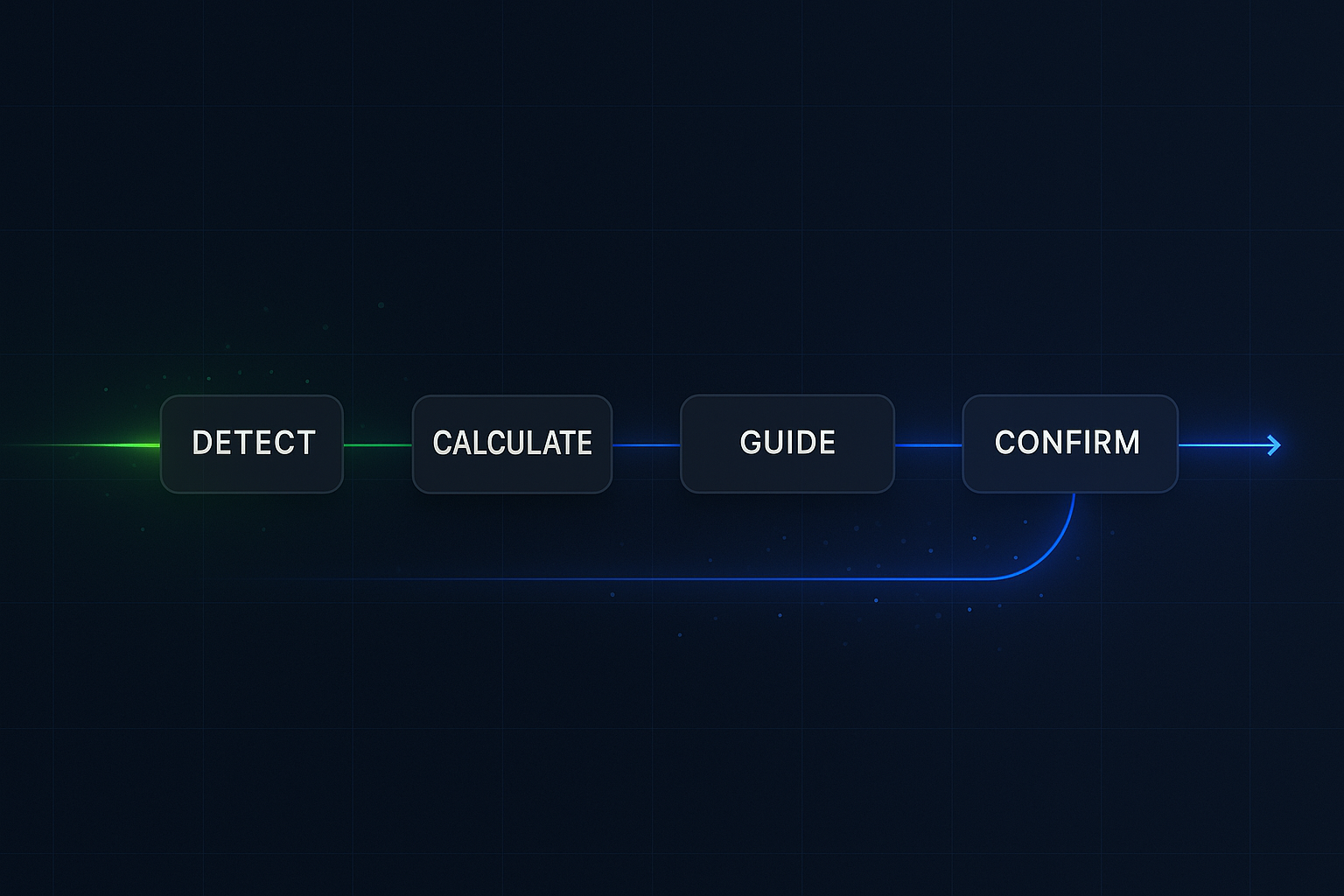
Detect → Calculate → Guide → Confirm
Pipeline control in four moves:
Detect — Capture every inbound across WhatsApp, SMS, web chat, and email. Extract intent and urgency. Calculate — Set intent-based SLAs and priority. Determine next best action and owner. Guide — Orchestrate the reply, route the thread, and support operational handoff to the front desk. Confirm — Track status to booking confirmation and downstream outcomes. Close the loop.
Signals → processing → conversion → revenue. ReplyOS makes it operational.
Intent-based SLAs beat blanket timers
Define SLAs by intent and channel.
- Urgent triage vs. routine admin need different timers.
- WhatsApp/SMS expect tighter windows; web chat needs in-session escalation; email uses templated drafts.
- ReplyOS applies these rules automatically once intent is detected.
Outcome: speed that matches the job-to-be-done, not a blanket target.
Context-rich routing to the front desk
Front desks need context, not chaos.
- ReplyOS routes with intent, channel, and thread history.
- Handoff includes status, suggested next step, and any compliance notes.
- Ownership and timing are explicit. No silent stalls.
Outcome: fewer loops, faster confirmations.
Draft-first workflows keep you fast and compliant
Speed must stay safe.
- Draft-first content workflows let teams prepare approved responses.
- Front desks can edit or approve in seconds.
- Editorial governance is preserved; audit trails are clear.
For regulated providers (e.g., NHS England/CQC contexts), this supports operational control without slowing the first reply.
Structured conversation status turns speed into progress
Status is the contract with revenue.
- ReplyOS tracks structured conversation states: new, triaged, needs info, ready to book, booked, no-show risk, closed.
- Each state has clear next actions and owners.
- Conversion visibility shows where leakage happens. Fix the stage, not just the response time.
Outcome: practical pipeline visibility from first enquiry to booked outcome.
Guide / Track / Adapt
Control loops that keep revenue moving:
- Guide — provide the next best action within the thread.
- Track — monitor stage movement and SLA adherence by intent.
- Adapt — refine rules weekly from leakage and stall patterns.
ReplyOS provides the signal system to Guide / Track / Adapt without spreadsheets.
Scenario type
Illustrative example
Stage
Initial triage
Illustrative response lag
Modelled example: ~30 minutes
Likely effect on progress
More enquiries progress to ‘needs defined’ when intent SLAs are applied
Operational note
Channel-aware timers reduce early stalls
Scenario type
Estimated scenario
Stage
Handoff to front desk
Illustrative response lag
~2 hours
Likely effect on progress
Threads risk stalling when context is missing
Operational note
Routing with status + next action reduces back-and-forth
Scenario type
Modelled example
Stage
Draft approval
Illustrative response lag
Modelled example: ~10 minutes
Likely effect on progress
Safe same-day send maintains momentum
Operational note
Draft-first templates enable rapid approval
Scenario type
Common pattern (qualitative)
Stage
Follow-up after info request
Illustrative response lag
Modelled example: 24+ hours
Likely effect on progress
Perceived delay increases drop-off risk
Operational note
Automated nudges + ownership reduce idle time
Weekly stalled-thread review restores momentum
A practice reviews stalled threads every Friday. ReplyOS surfaces threads stuck at ‘needs info’ for 48+ hours. The team sends a pre-approved follow-up on WhatsApp and schedules a same-day call for high-intent cases.
Result: fewer silent stalls and cleaner Monday pipeline. Reliability improves because the review is part of the operating rhythm, not a heroic catch-up.
Web chat: turn reply into in-session progression
Reducing response delay on web chat from minutes to in-session guidance creates a different user perception. The enquiry feels ‘handled’. With ReplyOS, intent detection triggers a booking path while the visitor is still present, or automatically routes to a human with context intact.
Outcome: the first reply guides a next step instead of closing the tab.
See the leakage. Close the gap.
Most enquiries are wasted. You just don’t see it. ReplyOS turns signals into revenue by turning first-response speed into guided next actions and confirmed bookings.
How is ReplyOS different from an autoresponder or generic chatbot?
Autoresponders hit a timer. ReplyOS operates a pipeline. It detects intent, sets SLA by context, routes with ownership, and tracks to booking confirmation and downstream outcomes.
Can we keep control over messaging quality and governance?
Yes. Draft-first content workflows let teams approve or adapt messages quickly. You keep editorial control and audit trails while responding fast.
Which channels does ReplyOS capture?
WhatsApp, SMS, web chat, and email. All threads roll into structured tracking with status visibility and routing context.
How do we reduce leakage between first reply and confirmation?
Use intent-based SLAs, context-rich routing, and structured status. Review stalled threads weekly. ReplyOS makes these steps visible and repeatable.
Will this replace our front desk?
No. ReplyOS supports operational handoff to front desks with clear context and next actions. It augments teams with intent detection and tracking rather than replacing them.
Next step
See ReplyOS in action
Explore how ReplyOS captures and converts patient enquiries across every inbound channel.
View platform overviewContinue reading